State Intelligence
Mortgage Lender Chicago
State Intelligence · IL
Mortgage Lender Chicago
Your guide to mortgage lending in the Chicagoland market. From Lincoln Park brownstones to suburban new construction, strategic financing starts with understanding the local landscape.
Finding the right mortgage lender in Chicago can make the difference between a stressful homebuying experience and a smooth path to ownership.
Whether you’re eyeing a vintage bungalow in Portage Park or a sleek condo in River North, local lenders bring neighborhood expertise that national banks often lack.
Chicago Mortgage Lenders Overview
A mortgage lender in Chicago IL helps buyers and homeowners secure financing for purchasing property, refinancing an existing mortgage, or tapping home equity.
Choosing a local lender matters because Chicago’s real estate market has unique characteristics—from Cook County’s property tax structure to the prevalence of attorney-driven closings—that require specialized knowledge.
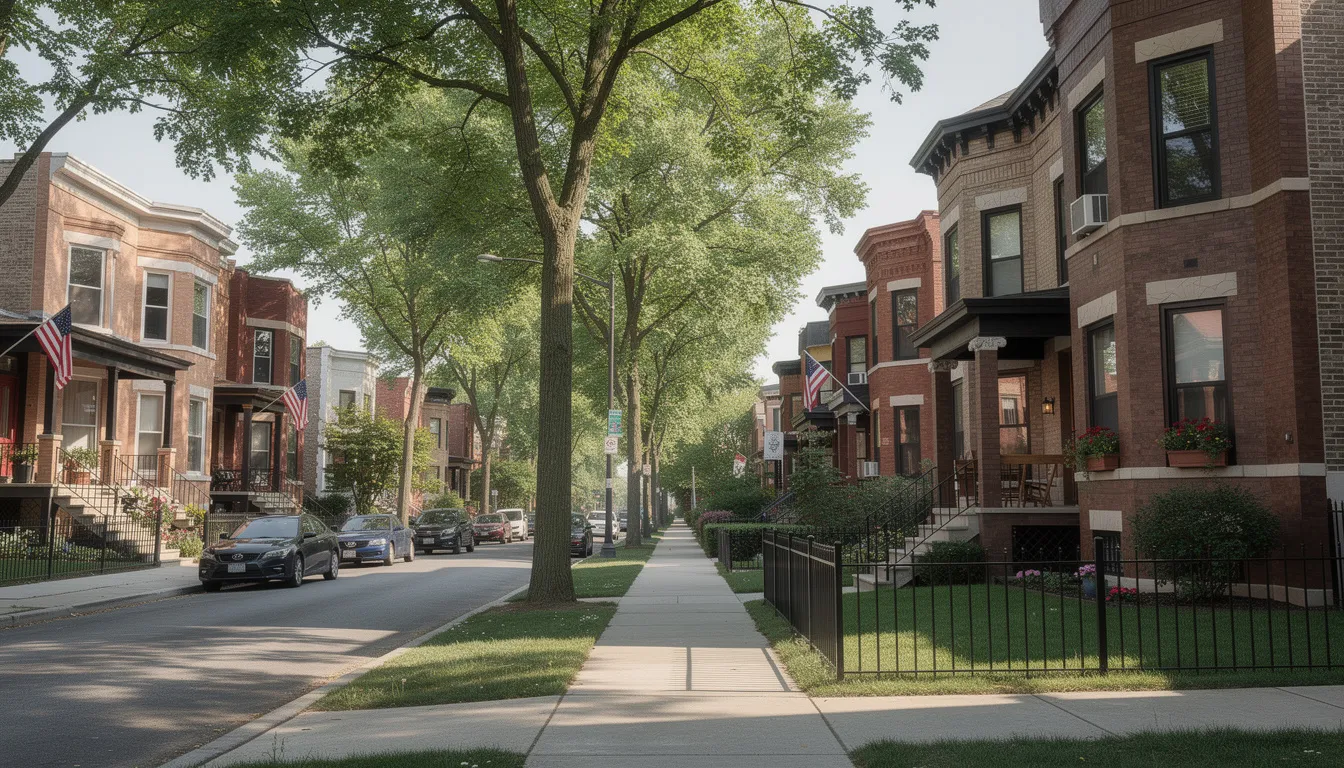
Chicago mortgage lenders serve buyers across diverse neighborhoods and suburbs, including Lincoln Park, Logan Square, Oak Park, Evanston, and Jefferson Park.
Each area presents different property types, price points, and tax considerations that experienced local professionals navigate daily.
This article is informational, designed to help you compare options, understand mortgage rates, and prepare for working with Chicago-based lenders.
Common services include:
- Purchase loans for primary residences
- Refinancing to lower monthly payments or change loan terms
- First-time buyer programs with payment assistance
- Multi-unit investment property loans for Chicago’s popular 2–4 flat market
Competitive Chicago Mortgage Rates
Chicago mortgage rates generally track national averages but can vary based on the lender, loan type, your credit profile, and even neighborhood tax rates.
Lenders in the area offer personalized rate quotes—often the same day—based on your fico score, income, loan amounts, and property type.
Understanding the difference between interest rate and APR is essential.
The interest rate is what you pay to borrow money, while the APR (Annual Percentage Rate) includes the interest rate plus lender fees, giving you the true cost of borrowing.
For a typical Chicago home priced at $400,000 with a 30-year fixed rate mortgage at 6.5% interest rate:
| Component | Rate | Monthly Payment |
|---|---|---|
| Interest Rate | 6.5% | $2,528 (principal + interest) |
| APR | 6.75% | Reflects total borrowing cost including fees |
Many Chicago lenders provide online mortgage calculators and pre-qualification tools so buyers can check estimated payments from home before beginning serious house shopping.
Property taxes and HOA dues in certain Chicago neighborhoods can significantly affect your total monthly mortgage payments.
A $400,000 home in one ward might have property taxes $3,000 higher annually than the same-priced home in another area—a difference of $250 per month.
Fixed-Rate Mortgages in Chicago
A fixed rate mortgage locks in your interest rate for the entire loan term, providing predictable monthly mortgage payments regardless of market fluctuations.
Most Chicago buyers choose either a 30-year or 15-year fixed loan for this payment stability.
Fixed-rate loans are particularly popular for long-term owners in neighborhoods with steady appreciation, like Lakeview, Lincoln Square, and Jefferson Park.
Buyers who plan to stay in their home for more than seven years often prefer the consistent monthly payments a fixed amount provides.
Here’s a comparison for a $350,000 loan:
| Loan Term | Interest Rate | Monthly P&I | Total Interest Paid |
|---|---|---|---|
| 30-year fixed | 6.5% | $2,212 | $446,320 |
| 15-year fixed | 5.9% | $2,941 | $179,380 |
When buyers expect rates to rise or want predictable housing costs despite fluctuating utility and tax expenses, a steady interest rate through a fixed-rate product offers peace of mind.
Adjustable-Rate Mortgages (ARMs) in Chicago
An adjustable rate mortgage starts with an initial fixed period—typically 5, 7, or 10 years—before the rate adjusts periodically based on a market index.
A 7/6 ARM, for example, holds steady for seven years, then adjusts every six months afterward.
Some Chicago buyers use ARMs for short-term ownership plans.
Consider someone purchasing a condo in River North planning to live there for 5–7 years before moving to the suburbs for more space.
The lower initial ARM payment provides savings during those years.
| Loan Type | Initial Rate | Initial Payment | Payment After Adjustment |
|---|---|---|---|
| 30-year Fixed | 6.5% | $2,528 | $2,528 (unchanged) |
| 7/6 ARM | 5.75% | $2,334 | Variable (could increase) |
ARMs and adjustable rate jumbo mortgage products are common for higher-priced properties in downtown high-rises and certain North Side neighborhoods.
However, buyers should understand the risk of payment increases when the fixed period ends.
Personalized Service from Chicago Mortgage Lenders
Despite the growth of online mortgage options, relationship-based lending remains valuable in Chicago.
Local loan officers understand the nuances of competing in a fast-moving market where multiple-offer situations are common during spring and early summer.
Chicago loan officers often provide one-on-one consultations to review credit, discuss down payment options, and help structure offers that stand out.
Many lenders offer no-obligation pre-approvals—either in person or via secure online portals—giving buyers a clear price range before house shopping begins.
Responsive communication around appraisal issues, attorney review, and condo association documents is especially valuable in Chicago’s attorney-driven closing process.
When problems arise, having a local professional who can quickly coordinate with all parties often saves deals.
Post-closing support matters too.
Mortgage services from local lenders often include guidance on refinancing if rates drop or tapping home equity for renovations to older Chicago housing stock—something many homeowners consider within a few years of purchase.
Local Expertise in Chicago Neighborhoods
While lending rules may feel the same everywhere, local knowledge of Chicago neighborhoods makes a real difference in getting your loan approved smoothly.
Chicago-focused lenders understand nuances like:
- Property tax differences between city wards
- Special assessments on condos and how they impact approval
- Special service areas (SSAs) that add to monthly payments
- How vintage building conditions affect appraisals
Multi-unit and 2–4 flat properties are common in areas like Logan Square, Avondale, and Albany Park.
Experienced lenders know how to underwrite these properly, including how rental income factors into qualification.
Local lenders are also familiar with common building issues—older brick structures, garden units with egress concerns, vintage three-flats needing updates—and how these can impact appraisal and loan approval.
Home Loan Options for Chicago Buyers and Owners
Chicago mortgage lenders offer various loan types to match different buyer situations: conventional, FHA, VA, USDA (for outer areas), jumbo, and renovation loans.
Your choice depends on down payment size, credit profile, property type, and whether you’ll occupy the property or use it as an investment.
| Loan Type | Min. Down Payment | Best For |
|---|---|---|
| Conventional | 3-5% | Buyers with good credit, avoiding mortgage insurance with 20% down |
| FHA Loans | 3.5% | First-time buyers, flexible credit requirements |
| VA Loans | 0% | Active duty service members and veterans |
| USDA Loans | 0% | Properties in eligible rural/suburban areas |
| Jumbo | Varies | Loans exceeding the conforming loan limit |
| Renovation | Varies | Purchasing and updating older properties |
FHA home loans reduce barriers for buyers with lower credit scores, while VA home loans offer zero down payment for eligible military families.
For high cost areas or luxury properties, a non conforming jumbo mortgage addresses loan amounts above the conforming limit.
Chicago lenders often participate in Illinois Housing Development Authority (IHDA) programs and other local down payment assistance overcoming the initial home investment barrier for eligible buyers. For current rates, IHDA assistance programs, and neighborhood-by-neighborhood buying strategies, read our comprehensive Illinois Mortgage Guide for 2026.
First-Time Home Buyer Loans in Chicago
First-time buyers in Chicago typically worry about three things: down payment, credit score, and closing costs.
The good news is many Chicago lenders specialize in helping buyers with low down payments and flexible credit requirements navigate these concerns.
Low-down-payment options make homeownership accessible:
- Conventional loans with as little as 3% down
- FHA home loan products requiring only 3.5% down
- Payment assistance programs through federal and local governments
- Down payment grants that don’t require repayment
Many lenders offer education resources including first-time buyer seminars, neighborhood-focused workshops, and online guides.
First-time buyers frequently purchase condos or small bungalows in neighborhoods like Portage Park, Norwood Park, Bronzeville, and Rogers Park.
Experienced lenders help explain condo association financials and assessments—information that directly impacts whether mortgages insured by the federal housing administration or conventional lenders will approve the property.
Local lenders can also help first-timers compare renting versus buying costs, factoring in Chicago property taxes, homeowners insurance, and potential HOA dues.
Refinancing and Renovation Loans
Chicago homeowners might refinance for several reasons: lowering their mortgage rate, shortening their loan term, switching from an ARM to a fixed-rate product, or cashing out equity for home projects.
Refinancing can be especially attractive after several years of appreciation in neighborhoods undergoing revitalization, such as Pilsen, Uptown, or West Town.
Renovation and rehab loan options are popular for updating older Chicago homes:
- Conventional renovation products: Finance both purchase and repairs
- FHA 203(k) loans: Mortgages insured by the federal housing administration that include rehabilitation costs
- HomeStyle Renovation: Fannie Mae product for improvements
Consider a buyer purchasing a 100-year-old bungalow in Irving Park needing kitchen updates, new windows, and electrical work.
Rather than obtaining separate financing, a renovation loan combines the purchase price and repair costs into one mortgage with a single monthly payment.
Understanding Chicago Mortgage Costs & Payments
Your monthly payment in Chicago includes several components beyond just principal and interest:
- Principal and interest
- Property taxes (escrowed monthly)
- Homeowners insurance
- Mortgage insurance (if applicable)
- HOA or condo assessments (when applicable)
Property taxes in Cook County and surrounding counties vary widely.
Chicago-specific levies can significantly influence home value affordability—two homes at the same price may have dramatically different total payments based on location.
Lenders review debt-to-income ratios using the full payment, including estimated taxes and insurance, to ensure sustainable homeownership.
Closing costs in Chicago typically range from 2-5% of the loan amount and include:
| Cost Category | Typical Range |
|---|---|
| Lender fees | $1,500-$3,500 |
| Title charges | $1,000-$2,000 |
| City transfer tax | 0.75% of price |
| State transfer tax | 0.1% of price |
| Attorney fees | $500-$1,500 |
City of Chicago transfer taxes are often shared between buyer and seller depending on contract terms.
Understanding likely cash-to-close helps buyers prepare financially.
Pre-Approval vs. Pre-Qualification in Chicago
Pre-qualification is an initial estimate based on self-reported information—it provides a ballpark figure but carries little weight with sellers.
Pre-approval involves documented income verification, credit pull, and underwriter review, resulting in a stronger letter.
Chicago real estate agents and sellers prefer fully underwritten pre-approval letters when reviewing offers in competitive neighborhoods.
For buyers, this means:
- Gather pay stubs, W-2s, and tax returns before starting
- For self employed borrowers, prepare additional documentation including bank statement loan program materials if applicable
- Expect to provide explanation for any credit issues
- Request pre-approval before attending open houses
Many Chicago lenders can issue a pre-approval within 24–48 hours after receiving documents.
Choosing a Mortgage Lender in Chicago
Comparing several Chicago lenders rather than relying on one quote or national advertisement typically saves borrowers money and leads to better service.
Key evaluation factors include:
- Interest rate and APR: Compare the true cost of borrowing
- Closing costs: Request itemized estimates from each lender
- Responsiveness: How quickly do they return calls and emails?
- Local experience: Do they know your property type and neighborhood?
- Clarity: Can they explain terms in plain language?
Ask whether the lender has recent experience with your specific purchase type—a condo in a large association, a two-flat, or a mixed-use building common along Chicago’s commercial corridors.
Reading verified customer reviews helps gauge service quality.
Companies like Guaranteed Rate have extensive review histories.
Check mortgage lending NMLS numbers through the NMLS database to confirm Illinois licensing.
Consider how you prefer to work—in person at a Chicago branch, fully online, or a hybrid approach—and choose a lender that matches your style.
Working with Local Loan Officers and Specialists
Local loan officers coordinate closely with Chicago real estate agents, attorneys, and title companies to keep the process on track.
This collaboration matters in a market where attorney review periods and condo document requirements can delay closings.
An experienced local loan officer can flag issues early, such as:
- Unusual condo bylaws affecting approval
- Building litigation that concerns lenders
- Appraisal challenges in rapidly appreciating areas
- Insurance requirements for older buildings
Preparing documents in advance helps Chicago borrowers close on time. Have these ready:
- Last two years of tax returns
- Recent pay stubs (30 days)
- W-2s or 1099s from the past two years
- Bank statements (60 days)
- Identification documents
For medical professionals, bank statement loan program options or specialized professional loans may apply.
Private lenders sometimes offer products for unique situations not covered by conventional guidelines.
Consistent communication via phone, email, and secure portals is essential around key milestones: appraisal completion, conditional approval, rate lock confirmation, and final clear-to-close.
Frequently Asked Questions About Chicago Mortgage Lenders
How long does it take to close a mortgage in Chicago?
Most Chicago mortgage transactions close within 30 to 45 days from contract execution. Timelines vary based on property type, loan program, and documentation speed. Chicago’s attorney-driven closing process can add time if issues arise during attorney review.
What credit score do I need to buy a home in Chicago?
Minimum credit score requirements depend on the loan program. FHA loans may accept scores as low as 580 with 3.5% down. Conventional loans typically require 620 or higher, and the most competitive rates generally require scores of 740 or above.
What’s the difference between pre-approval and pre-qualification?
Pre-qualification is an initial estimate based on self-reported information and carries little weight with sellers. Pre-approval involves documented income verification, credit pull, and underwriter review, resulting in a stronger letter that Chicago real estate agents and sellers prefer in competitive neighborhoods.
How much are closing costs in Chicago?
Closing costs in Chicago typically range from 2–5% of the loan amount. They include lender fees, title charges, city transfer tax (0.75% of price), state transfer tax (0.1%), and attorney fees. Transfer taxes are often shared between buyer and seller depending on contract terms.
Should I choose a fixed-rate or adjustable-rate mortgage?
Fixed-rate mortgages lock in your rate for the entire loan term, providing predictable monthly payments—ideal for buyers planning to stay more than seven years. Adjustable-rate mortgages offer lower initial rates that adjust after a fixed period, which can benefit buyers planning to sell or refinance within five to seven years.
How much do I need for a down payment on a Chicago home?
Down payment requirements range from 0% to 20% or more depending on the loan program. Conventional loans start at 3–5% down, FHA loans require 3.5%, and VA loans offer zero down payment for eligible military borrowers. Many Chicago lenders also participate in IHDA down payment assistance programs.
How do Chicago property taxes affect my mortgage payment?
Property taxes in Cook County vary widely and can significantly influence affordability. Two homes at the same price may have dramatically different total payments based on location—a difference of $250 per month or more. Lenders include estimated taxes in your monthly escrow payment and factor them into debt-to-income calculations.
Next Steps for Chicago Homebuyers and Homeowners
Working with a Chicago-based mortgage lender combines competitive rates with local market knowledge and personalized guidance.
Whether you’re buying your first home or refinancing after years of appreciation, the right lender makes the process more efficient.
Your next steps:
- Review your credit: Check reports for errors and understand your score
- Estimate comfortable payments: Use online calculators to set a realistic budget
- Gather documents: Collect pay stubs, tax returns, and bank statements
- Contact a licensed lender: Reach out to an Illinois mortgage professional for pre-approval
Timelines move quickly in Chicago’s peak spring and summer markets.
Early preparation with a lender makes your offers more attractive when competing against other buyers.
Schedule a consultation—by phone, video, or in person—with a local lending professional, like Cindy Koutsovitis, to discuss your specific neighborhood, property type, and goals.
The urban development patterns across Chicago neighborhoods mean every buyer’s situation is unique, and personalized guidance helps you find the right home loan for your circumstances.
Explore More Markets
Cindy is licensed across five states. See mortgage intelligence for:
Have a Question for Cindy?
Whether you’re buying your first home, refinancing, or tapping into equity—Cindy is here to help you navigate every step with confidence.
Ready to Build Wealth in Chicago?
Whether you’re buying your first home or expanding your portfolio, Cindy Koutsovitis brings 25+ years of strategic mortgage counsel to help you make the smartest move in Illinois’s market.